The Closing Meeting Is Not a Formality
Ask most people what happens at the end of an audit and they will say something like, “the auditor reads out the findings.” That is partly right, but it undersells what the audit closing meeting is actually for. A well run closing meeting is the point where the entire audit gets distilled into something the organisation can act on. It is where the auditor communicates conclusions, not just a list of problems.
On this page
If you are new to auditing, or you are a quality manager preparing your team for an upcoming external audit, understanding the closing meeting properly will save you from surprises. This guide walks through what the audit closing meeting is, what happens during it, who should attend, and how to run one well. Whether you are sitting on the auditor side of the table or the auditee side, this is a meeting worth understanding in detail.
What Is an Audit Closing Meeting?
The audit closing meeting is the formal session held at the end of on site audit activities, where the audit team presents its findings, conclusions, and any recommendations to the auditee. It marks the transition from evidence gathering to reporting. Everything that happened during the audit, the document reviews, the interviews, the facility walk, the sampling of records, gets summarised and communicated at this point.
ISO 19011:2018, the international guidelines for auditing management systems, describes the closing meeting as a requirement for all audits. The 2026 revision of ISO 19011 maintains this expectation and adds some tightening around how nonconformities are reported and graded. The closing meeting is not optional, and it is not something you can replace with an email. It is a structured, face to face (or virtual) communication event with a defined purpose.
The primary purpose is to present audit findings in a way that is clear, fair, and understood by the people who need to act on them. A secondary purpose is to give the auditee an opportunity to clarify anything they believe has been misunderstood before the formal report is issued.
 Exemplar Global Certified Training ProviderRTP No. 310970


How It Fits Into the Audit Lifecycle
To understand the closing meeting properly, it helps to see where it sits in the overall process. If you want a full picture of how audits move from initiation through to follow up, the audit lifecycle practical guide on this site covers that in depth. For now, the short version is this: the closing meeting comes after all field work is complete and before the formal audit report is issued.
The sequence looks roughly like this:
- Audit planning and preparation
- Opening meeting
- On site audit activities (interviews, document review, observation)
- Auditor team debrief and finding consolidation
- Closing meeting
- Formal audit report
- Follow up and corrective action verification
The closing meeting sits at a critical junction. By this point, the auditor has gathered and evaluated evidence. Findings have been classified. The audit conclusion has been formed. The closing meeting is where all of that gets communicated formally to the organisation for the first time.
Who Should Attend the Closing Meeting?
The closing meeting should be attended by representatives of the auditee organisation who have the authority to understand and act on the findings. In practice, this typically means:
- Senior management or the management representative
- Departmental managers whose areas were audited
- The quality manager or equivalent
- Any technical specialists who participated in the audit
- The full audit team, including the lead auditor and any team members or observers
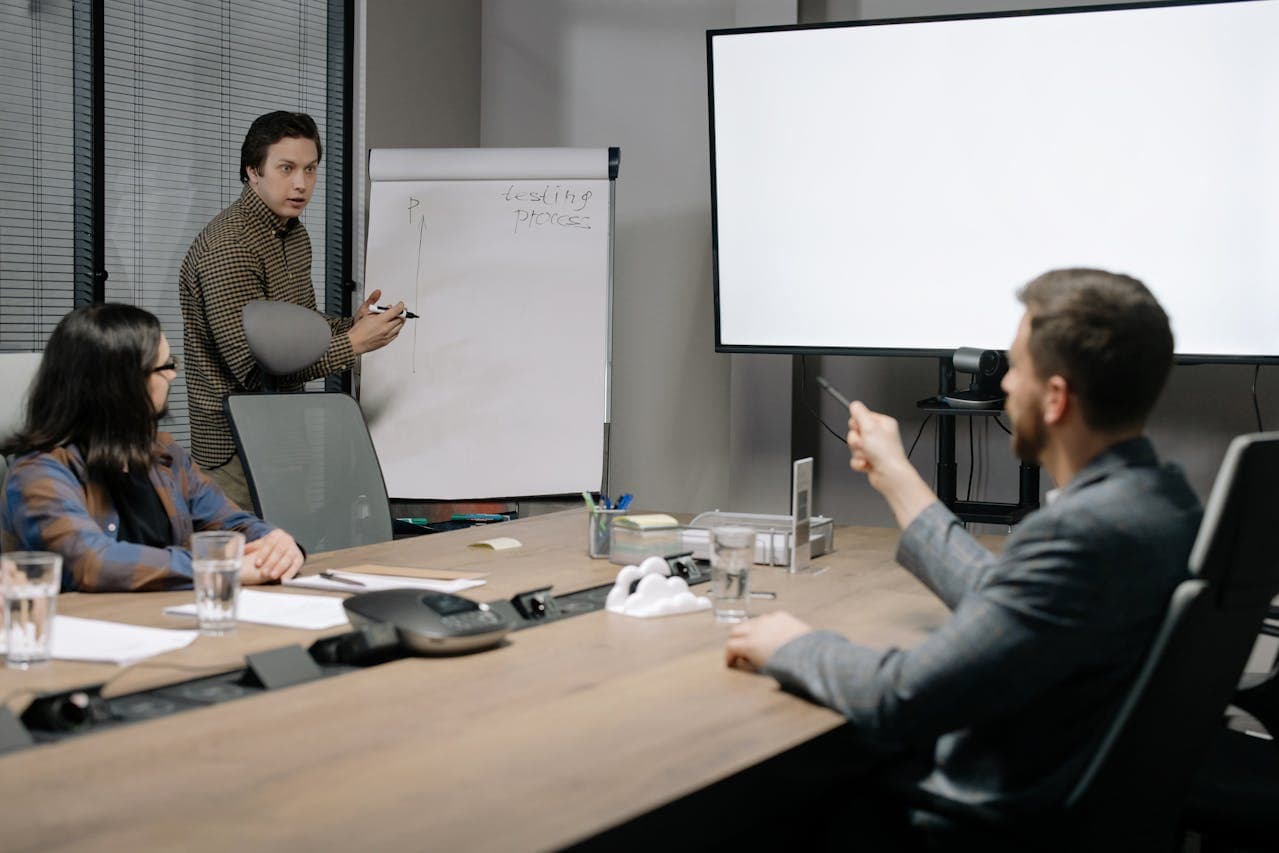
For a small internal audit, the closing meeting might involve just three or four people. For a full third party certification audit of a large site, you might have twenty people in the room. The key is that the right people are present. If a nonconformity was found in the maintenance department, the maintenance manager needs to be in the room when it is presented. Having findings communicated secondhand through a quality manager creates gaps and misunderstandings.
The lead auditor chairs the closing meeting. If there is an audit team, each team member may present findings from their assigned areas, but the lead auditor opens and closes the session and presents the overall audit conclusion.
What Gets Covered in the Closing Meeting?
A well structured closing meeting covers several distinct elements. These are not just a reading of a list. Each element serves a purpose.
Acknowledgement and Thanks
The lead auditor opens by thanking the organisation for their cooperation and hospitality. This is not just politeness. It sets a professional tone and signals that the audit has been conducted in a spirit of collaboration rather than confrontation. Auditing is not an adversarial process, and the opening of the closing meeting should reinforce that.
Reminder of Audit Objectives, Scope and Criteria
The auditor briefly restates what the audit was set out to achieve, what areas or processes were covered, and against what requirements the evidence was assessed. This is important because it frames everything that follows. Findings only make sense in context. If the scope of the audit was limited to the Sydney warehouse operation, the auditee needs to understand that findings do not necessarily reflect the whole organisation.
Presentation of Positive Findings
Good auditors do not only look for problems. Where the organisation is doing something well, that should be acknowledged. Positive findings, sometimes called strengths or commendations, are genuine observations of effective practice. They are not flattery. They tell the organisation what is working and what should be preserved. Experienced auditors know that acknowledging strengths builds credibility for the findings that follow.
Presentation of Opportunities for Improvement
Opportunities for improvement (OFIs) are observations where the auditor sees room for the system to perform better, but where the evidence does not support a nonconformity. They are not requirements. The organisation is not obligated to act on them. But they are offered in good faith as professional observations from someone who has just spent time looking at the system with fresh eyes. If you want to understand how to write these well, the guide on writing opportunities for improvement worth acting on is worth reading.
Presentation of Nonconformities
This is the part of the closing meeting that gets the most attention, and rightly so. Nonconformities are findings where evidence shows the organisation has failed to meet a requirement of the standard or its own documented system. Each nonconformity should be presented clearly, with the requirement that has not been met, the objective evidence that supports the finding, and the classification (major or minor).
A major nonconformity indicates a significant failure that puts the integrity of the management system at risk, or a complete absence of a required element. A minor nonconformity is a lapse or isolated gap. The distinction matters because it affects what happens next, including timelines for corrective action and, in a certification audit, whether the certificate can be issued. The guide on grading nonconformities covers this in detail.
Under ISO 19011:2026, there is increased emphasis on ensuring that the grading of nonconformities is consistent and defensible. The auditor must be prepared to explain the classification if challenged.
The Audit Conclusion
The audit conclusion is not the same as the list of findings. It is the auditor's overall judgement about the management system based on everything observed during the audit. For a certification audit, the conclusion will include a recommendation to the certification body, such as recommending certification, recommending certification subject to closure of nonconformities, or not recommending certification. For an internal audit, the conclusion might be a statement about the overall effectiveness of the system and its readiness for external audit.
The audit conclusion should be evidence based and proportionate. It should reflect the totality of what was found, not just the negative findings in isolation. If you want a deeper understanding of what an audit conclusion involves, the plain English guide to audit conclusions covers this well.
Opportunity for Questions and Clarification
After presenting findings, the lead auditor should invite questions. This is not a negotiation. The auditor's findings are based on evidence and are not up for debate. But clarification is legitimate. If the auditee believes a finding is based on a misunderstanding of how a process works, or that a piece of evidence was overlooked, this is the time to raise it. A competent auditor will listen, consider the information, and either maintain the finding with explanation or, if genuinely new information changes the picture, adjust accordingly.
What should not happen is the auditee arguing that a nonconformity should be downgraded simply because they disagree with it. Evidence is evidence. If the requirement was not met and the evidence shows it, the finding stands.
Next Steps and Timelines
Before closing, the lead auditor explains what happens next. For a certification audit, this typically means the organisation has a defined period to submit corrective action plans for any nonconformities. For an internal audit, the quality manager will usually take responsibility for assigning corrective actions and tracking them through to closure. The auditor should be clear about report delivery timelines, corrective action deadlines, and any follow up audit that may be required.
Common Mistakes in Closing Meetings
Having observed and conducted hundreds of closing meetings, a few patterns of failure come up repeatedly.
Springing Surprises
Nothing should appear in the closing meeting that the auditee has not already been made aware of during the audit. Good auditing practice means communicating significant findings as they are discovered during the on site phase. If a major nonconformity is found at 10am, the relevant manager should know about it by 10:30am, not at the closing meeting at 4pm. Surprises in closing meetings damage trust and create unnecessary conflict.
Reading From the Report
The closing meeting is a communication event, not a reading exercise. Auditors who simply read their written findings word for word lose the room quickly. The findings should be communicated clearly and conversationally, with enough context for the audience to understand what was found and why it matters. The written report comes later. The closing meeting is about human communication.
Being Vague About Nonconformities
A nonconformity presented in the closing meeting should be specific. It should name the requirement, describe the evidence, and explain the gap. Vague statements like “there were some issues with document control” are not useful. The auditee needs to understand exactly what was found so they can address the root cause, not just the symptom.
Allowing the Meeting to Become a Debate
Some auditees will push back on findings, sometimes aggressively. The lead auditor's job is to remain calm, restate the evidence, and hold the finding if it is supported. Capitulating to pressure without new evidence is a serious professional failure. Equally, being unnecessarily rigid when the auditee raises a legitimate point of clarification is also poor practice. The skill is in knowing the difference.
Skipping Positive Findings
Auditors who only present problems miss an opportunity to build a constructive relationship with the auditee. Acknowledging what works well is not softening the blow. It is an honest reflection of what was found. A closing meeting that only covers problems leaves the auditee feeling attacked rather than supported.
Closing Meetings in Internal vs External Audits
The structure of a closing meeting is broadly the same whether you are conducting an internal audit or a third party certification audit. The differences are in scale, formality, and consequence.
An internal audit closing meeting might last fifteen to thirty minutes and involve a handful of people from the same organisation. The tone is collegial. The focus is on improvement. The findings feed into the internal corrective action process and eventually into the management review.
A certification audit closing meeting is more formal. The auditor represents an external certification body. The findings will determine whether the organisation receives or retains its certificate. The stakes are higher, and the auditee's senior management will typically be present. The lead auditor needs to handle this environment with more care, particularly when presenting major nonconformities.
For second party audits, such as supplier audits, the closing meeting sits somewhere in between. The auditor represents the client organisation, and the findings will inform procurement decisions. The relationship between auditor and auditee is more complex because there is a commercial dynamic at play.
What Happens After the Closing Meeting?
The closing meeting does not end the audit. It ends the on site phase. After the meeting, the lead auditor finalises and issues the formal audit report, which documents everything that was communicated in the closing meeting in written form. The auditee then prepares corrective action responses for any nonconformities, typically within a timeframe agreed during the closing meeting or set by the certification body.
For internal audits, the findings feed into the organisation's corrective action system and are reviewed at the next management review. For certification audits, the certification body reviews the corrective actions before making a final decision on certification status.
The closing meeting is therefore not the end of the story. It is the beginning of the improvement cycle that the audit is designed to trigger.
Practical Tips for Auditors Running a Closing Meeting
- Prepare your closing meeting notes before the meeting, not during it. You should know exactly what you are going to say before you walk into the room.
- Confirm who will be attending and ensure the right people are present before you begin.
- Present nonconformities in a consistent format: requirement, evidence, gap. Every time.
- Keep the meeting focused. It is not a debrief of everything that happened during the audit day. It is a communication of findings and conclusions.
- Watch the room. If people look confused, stop and check understanding. If someone looks like they are about to challenge a finding aggressively, acknowledge their concern before they escalate.
- Close the meeting formally. Thank the auditee, confirm next steps, and end clearly. Do not let the meeting drift into informal conversation that muddies the formal record.
Exemplar Global Certified Training ProviderRTP No. 310970Practical Tips for Quality Managers Preparing for a Closing Meeting
- Make sure the right people are in the room. If a finding is likely in a particular area, have that manager present.
- Brief your team in advance. People who have never been through a closing meeting can find it stressful. Knowing what to expect helps them respond professionally rather than defensively.
- Listen carefully before responding. If you disagree with a finding, wait until the auditor has finished presenting it before raising your concern. Interrupting mid presentation rarely goes well.
- Take notes. The formal report comes later, but having your own notes from the closing meeting helps you start planning corrective actions immediately.
- Do not commit to corrective action timelines on the spot without thinking them through. It is fine to say you will confirm timelines in writing after the meeting.
How Audit Workshop Training Covers the Closing Meeting
Understanding the theory of a closing meeting is one thing. Being able to run one, or sit through one as an auditee, without losing your composure is another. At Audit Workshop, our Internal Auditor and Lead Auditor courses include practical exercises that simulate both opening and closing meetings. Participants practise presenting findings clearly, handling pushback professionally, and structuring their communication so that auditees leave the room understanding what was found and what needs to happen next.
Our Lead Auditor courses, available across ISO 9001, ISO 14001, ISO 45001, ISO 27001, ISO 42001, ISO 37001, and ISO 13485, are built around real audit scenarios drawn from over 500 external certification audits conducted by our founder. That means the closing meeting exercises are grounded in what actually happens in practice, not just what the textbook says should happen.
If you are preparing to run your first closing meeting, or you want to sharpen your skills before your next lead auditor assessment, our courses give you the structured practice you need to walk into that room with confidence.